Crochet Belts - Pattern

The Crochet Belts – Pattern is a fantastic way to merge the world of high fashion with the artisanal charm of handmade crafts, offering a unique accessory that fits any wardrobe. Unlike store-bought accessories that often lack personality, a belt made from a customized design allows you to express your individual style while mastering a functional piece of art. Whether you are looking to cinch a flowing summer dress or add a pop of color to a pair of vintage jeans, learning to create your own belt through a structured crochet approach is a rewarding endeavor for makers of all skill levels.
Finding the perfect Crochet Belts – Pattern can transform your leftover yarn stash into high-end boutique items that make for excellent gifts or personal treasures. The versatility of these patterns is truly remarkable, ranging from delicate lace-like cords to sturdy, wide bohemian cinchers that define the waistline. Because belts require significantly less yarn than a sweater or a blanket, they serve as the perfect weekend project for those who want instant gratification and a stylish result without a months-long commitment.
In this comprehensive guide, we will explore the nuances of the Crochet Belts – Pattern, detailing the essential materials, technical stitches, and finishing touches required for a professional look. We will dive into how to choose the right fibers for durability, how to incorporate hardware like buckles and rings, and how to ensure your belt doesn’t stretch out over time. By the end of this article, you will have a deep understanding of how to construct a durable and beautiful accessory that stands the test of time and fashion trends.
The success of a Crochet Belts – Pattern begins with the choice of fiber, as belts are subject to more tension and friction than most crochet items. While wool is lovely for garments, it often has too much “give” for a belt, which needs to remain firm to hold up trousers or shape a silhouette. Many experts recommend using mercerized cotton or nylon cord, as these materials offer a beautiful sheen and, more importantly, a lack of elasticity that ensures the belt maintains its original length even after repeated wear.
When you start working on a Crochet Belts – Pattern, you must also consider the hook size in relation to the yarn weight. To create a sturdy fabric that won’t sag, it is often wise to use a hook that is one size smaller than what the yarn label suggests. This creates tight stitches and a dense fabric, which is essential for a functional accessory that needs to withstand the mechanical pressure of a buckle or a knot.
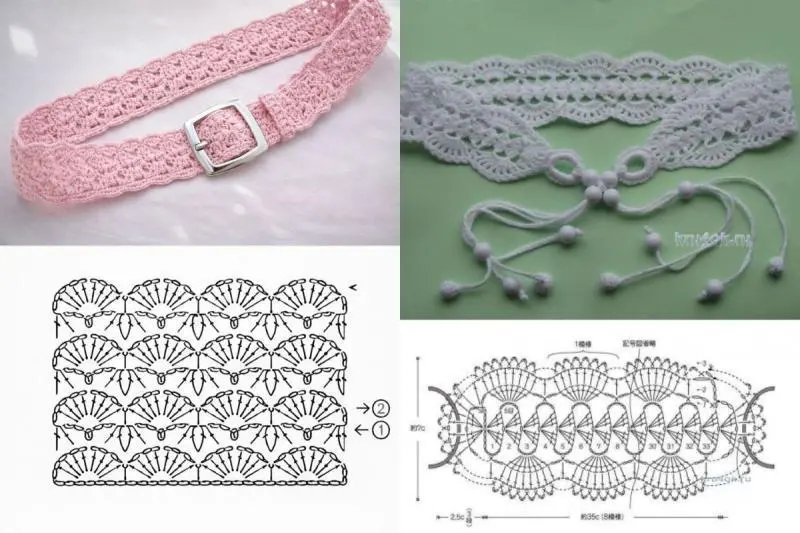
Hardware is another critical component of the Crochet Belts – Pattern. You can choose between traditional metal buckles with a prong, D-rings for a cinch-style look, or even large wooden buttons for a more organic, earthy feel. If you are going for a boho-chic aesthetic, you might skip the hardware entirely and design your belt with long tassels or braided ties that allow for an adjustable fit regardless of the wearer’s waist size.
In addition to the primary yarn, some makers choose to incorporate beading or metallic threads into their Crochet Belts – Pattern. This adds a layer of sophistication and “sparkle” that elevates the belt from a simple craft project to a statement piece of jewelry. Just be sure that any beads used have smooth centers to prevent them from fraying the yarn over time, especially at the points where the belt is frequently handled.
Stability is the hallmark of a well-made Crochet Belts – Pattern. Some advanced crafters even suggest crocheting around a core of thin clothesline or hemp rope to provide an unbreakable internal structure. This technique, often referred to as tapestry crochet or corded crochet, results in a belt that feels substantial and premium, much like a leather counterpart but with the unique texture only crochet can provide.
Lastly, don’t forget the importance of color fastness when choosing your materials. Since belts sit against clothing, you want to ensure the dye won’t rub off on a white dress or light-colored pants. Always test a small swatch of your chosen yarn from the Crochet Belts – Pattern by rubbing it against a piece of light scrap fabric while damp to ensure your hard work doesn’t lead to a laundry disaster later on.
The foundation of most Crochet Belts – Pattern designs involves stitches that provide lateral strength and minimal vertical stretch. The Foundation Single Crochet (FSC) is a brilliant way to start, as it provides more flexibility and a cleaner edge than a traditional starting chain. By using the FSC method, you ensure that the “edge” of the belt that sits against your body is as comfortable as it is durable.
For a classic, sturdy look, the Grit Stitch or the Waistcoat Stitch are excellent choices within a Crochet Belts – Pattern. These stitches create a dense, woven appearance that mimics the look of knit fabric or even leather webbing. Because these stitches are so compact, they provide the necessary “body” to the belt, preventing it from folding over on itself or curling at the edges when you sit down.
If you prefer a more decorative Crochet Belts – Pattern, you might explore Irish crochet motifs or the Shell Stitch. While these are more “holy” and delicate, they can be reinforced by sewing a grosgrain ribbon backing onto the finished crochet strip. This hybrid approach gives you the beauty of intricate lace with the structural integrity of a commercial belt, offering the best of both worlds for fashion enthusiasts.
Tunisian crochet is another phenomenal technique for a Crochet Belts – Pattern. Using a Tunisian Simple Stitch creates a grid-like fabric that is incredibly stable and thick. Because Tunisian crochet naturally results in a denser textile than standard crochet, it is often the preferred method for creating “heavy-duty” belts that need to support the weight of tools or heavy pouches in a festival setting.
For those who enjoy a challenge, incorporating Cable Crochet into your belt adds a masculine and sophisticated touch. Embossed cables running the length of the belt provide extra thickness and a 3D effect that looks stunning in solid, neutral colors like tan, olive, or charcoal. When following a cabled Crochet Belts – Pattern, remember that cables consume more yarn, so plan your yardage accordingly to avoid running out mid-row.
Edge finishing is the final technical hurdle in a Crochet Belts – Pattern. A simple Crab Stitch (reverse single crochet) around the entire perimeter of the belt provides a corded, finished look that hides any minor inconsistencies in your row ends. This border acts as a frame for your belt, making the piece look polished and preventing the edges from fraying or stretching out during the daily “on and off” routine.
One of the biggest advantages of making your own accessory using a Crochet Belts – Pattern is the ability to achieve a custom fit that commercial sizes simply can’t match. When measuring for a belt, always measure around the specific part of your body where you plan to wear it—hips, natural waist, or high waist. Remember to add about 6 to 8 inches to that measurement to account for the buckle overlap and the “tail” of the belt.
The “stretch factor” is a common complaint in the world of the Crochet Belts – Pattern. To combat this, many designers recommend making the belt about 5% shorter than the actual measured length. Over the first few wears, the fibers will settle and the stitches will tighten, naturally expanding the belt to the perfect, snug fit. This tension management is key to a long-lasting accessory that doesn’t become too loose over time.
For an adjustable Crochet Belts – Pattern, consider creating a series of “buttonholes” or gaps in the stitch work. You don’t necessarily need to cut the fabric; rather, you can use a Chain-1, Skip-1 technique at regular intervals during construction. This allows the prong of the buckle to pass through the belt at any point, making it a versatile piece that can be shared or worn with different layers of clothing.
If your Crochet Belts – Pattern is intended for a child or someone with a fluctuating waistline, a “tie-back” design is often the most practical. By ending the crochet work with long, sturdy I-cords, you create a belt that can be tied in a bow or a knot. This eliminates the need for hardware entirely and ensures that the belt can grow with the wearer, making it a sustainable and thoughtful gift.
Width is just as important as length in a Crochet Belts – Pattern. A standard belt loop on a pair of jeans is usually about 1.5 to 2 inches wide. Before you commit to a pattern, check the width of your favorite trousers’ loops to ensure the finished product will actually fit through them. A belt that is even a quarter-inch too wide will be unusable with jeans and better suited as a “waist cincher” over a cardigan.
Don’t forget to account for the belt tip shape. A square end is the easiest to crochet, but a tapered or pointed end looks much more professional and is easier to thread through a buckle. You can achieve a tapered point in your Crochet Belts – Pattern by using simple decreases (sc2tog) at the end of your rows, creating a neat triangle that finishes the piece with a flourish.
Once your Crochet Belts – Pattern is off the hook, the finishing touches will determine whether it looks like a “craft project” or a “fashion statement.” Blocking is essential. By pinning your belt to a blocking board and lightly steaming it, you set the stitches and ensure the edges are perfectly straight. This is especially important for cotton belts, which can sometimes have a bit of a “wave” to them immediately after being crocheted.
Adding a lining is a “pro-tip” for anyone serious about their Crochet Belts – Pattern. By hand-sewing a strip of coordinating fabric or ribbon to the back, you completely eliminate the possibility of the belt stretching. This lining also protects the yarn from the oils of your skin and the friction of your clothing, significantly extending the life of your handmade accessory.
For the buckle attachment in your Crochet Belts – Pattern, use a heavy-duty yarn needle and the same yarn you used for the project. Wrap the yarn around the buckle bar several times to create a secure hinge. If you are using a prong buckle, ensure you have left a small hole in the crochet fabric for the prong to sit comfortably without distorting the surrounding stitch work.
To give your Crochet Belts – Pattern a bit of “grip” and water resistance, you can lightly spray the finished (and blocked) belt with a fabric protector. Some makers even use a light coating of beeswax on cotton belts to give them a slightly rugged, weatherproof finish that feels similar to waxed canvas. This is particularly effective for outdoor or festival-style belts that might be exposed to the elements.
Cleaning your Crochet Belts – Pattern requires a gentle touch. Most handmade belts should be hand-washed in cool water with a mild detergent. Avoid wringing the belt, as this will distort the stitches; instead, roll it in a towel to remove excess moisture and lay it flat to dry. Proper care ensures that the vibrant colors and intricate textures of your belt remain intact for years of use.
Finally, consider making a matching set! Once you have mastered the Crochet Belts – Pattern, you can easily adapt the same stitches and yarn to create a matching watch strap, headband, or even a camera strap. This creates a cohesive, “designer” look that showcases your skills as a master of crochet accessories and provides a unique flair to any outfit you choose to wear.
1. Is a Crochet Belts – Pattern difficult for a beginner?
Not at all! Many belt patterns are essentially long, narrow rectangles. If you can crochet a basic scarf, you can crochet a belt. The only added challenge is working with a smaller hook and maintaining consistent tension to ensure the belt is sturdy.
2. How do I stop my crochet belt from stretching?
The best ways to prevent stretching are using non-elastic fibers like cotton or hemp, using a smaller hook for tighter stitches, and sewing a fabric lining (like grosgrain ribbon) to the back of the belt for structural support.
3. What is the best yarn for a Crochet Belts – Pattern?
Mercerized cotton is the gold standard because it is strong, doesn’t stretch much, and has a professional-looking sheen. Nylon cord and macramé thread are also excellent choices for a more industrial or modern look.
4. Can I make a belt without a metal buckle?
Yes! You can use D-rings, large buttons, or even just long braided ties. Another creative option is to use a “sliding knot” style, which works perfectly for bohemian-style belts made from cotton cord.
5. How much yarn do I need for one belt?
Most belts require very little yarn—usually less than one 50g skein of cotton. This makes a Crochet Belts – Pattern an excellent “stash buster” project for using up high-quality scraps from larger projects.
6. Can I add beads to my belt?
Absolutely. You can string beads onto your yarn before you start and slide them into place as you crochet, or you can sew them on afterward. Just ensure the beads don’t have sharp edges that could cut the yarn.
Creating a piece from a Crochet Belts – Pattern is more than just a craft; it is an exploration of functional fashion. In this article, we have discussed the vital importance of choosing non-stretch fibers, the technical benefits of stitches like the Tunisian Simple Stitch, and the essential finishing techniques like blocking and lining that elevate a handmade piece to boutique quality.
We also touched on how to customize the fit and hardware to ensure your belt is as practical as it is beautiful.