Card Trick Quilt Block - Pattern

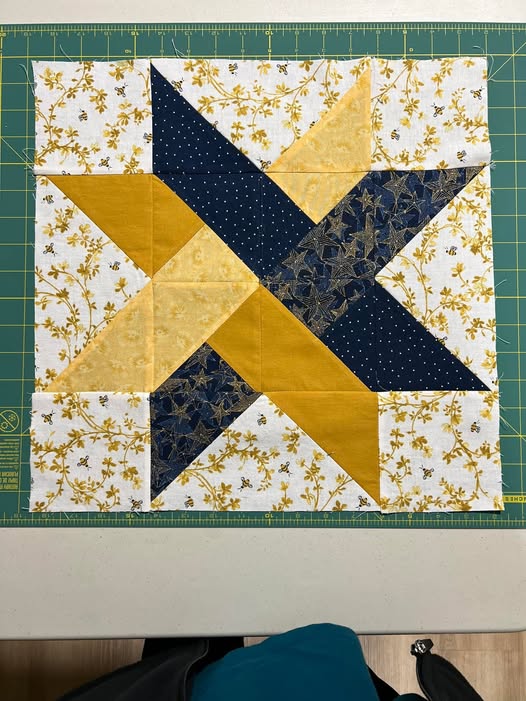
The Card Trick Quilt Block – Pattern is one of the most intriguing and visually captivating designs in the world of traditional quilting, offering a brilliant illusion of four overlapping cards. This classic pattern relies on clever color placement and precise geometric cuts to create a sense of depth that keeps the viewer’s eye moving across the fabric. Mastering the Card Trick Quilt Block – Pattern is a rite of passage for many quilters who want to move beyond basic squares and explore the magic of half-square triangles and quarter-square triangles.
When you first look at a finished Card Trick Quilt Block – Pattern, it might seem incredibly complex, as if the fabric strips are woven over and under each other. However, the true beauty of this quilt design lies in its systematic approach; it is essentially a nine-patch grid that uses specific triangle units to achieve the “trick.” By selecting high-contrast fabrics, you can make the card trick effect pop, ensuring that each “card” looks distinct and tangible within the quilt top.
In this comprehensive guide, we will delve deep into the mechanics of the Card Trick Quilt Block – Pattern, providing you with the insights needed to replicate this timeless look. Whether you are planning a full scrappy quilt or a singular decorative pillow, understanding the block construction and the math behind the seams is essential. We will cover everything from fabric selection to the final pressing techniques that ensure your quilt blocks lay perfectly flat and professional.
The foundation of the Card Trick Quilt Block – Pattern is built upon the nine-patch grid system, which is a staple in traditional quilting. To create the illusion of overlapping cards, the block is divided into nine equal sections, but unlike a simple checkerboard, these sections contain a mix of solid squares, half-square triangles (HSTs), and quarter-square triangles (QSTs). Each unit must be cut and sewn with a precise 1/4 inch seam allowance to ensure that the points of the “cards” meet perfectly in the center.
Choosing the right fabrics is the most critical step when starting your Card Trick Quilt Block – Pattern. You typically need four distinct colors for the “cards” and one neutral color for the background fabric. The background is what allows the cards to float and creates the negative space necessary for the optical illusion to work. If the background is too busy, the interlocking design of the cards will get lost, so many experts recommend a solid or a very subtle “read-as-solid” print for the base.
The “trick” in the Card Trick Quilt Block – Pattern comes from the central unit and the middle-edge units. The center of the block is a four-patch of triangles, where each of the four card colors meets. This specific intersection is where most quilters face the challenge of bulk at the seams. Learning how to nest your seams or press them open is a vital skill for this specific pattern, as it prevents a literal bump in the middle of your beautiful handmade quilt.
For beginners, starting with a larger block size, such as a 12-inch or 15-inch block, makes the Card Trick Quilt Block – Pattern much more manageable. Smaller blocks require tinier triangles, which can be finicky to handle and prone to stretching along the bias edge. By working with larger pieces of quilting cotton, you have more room for error and can clearly see how the color values interact to form the overlapping shapes.
SEO-conscious quilters often look for free quilt patterns that explain the “no-waste” method for creating triangles. In the Card Trick Quilt Block – Pattern, you can use the “two-at-a-time” HST method to speed up the process. This involves drawing a diagonal line on the back of your lighter fabric, sewing a quarter inch on both sides of that line, and cutting it down the middle. This technique keeps the fabric stable and reduces the risk of the fabric distorting during the sewing process.
Ultimately, the Card Trick Quilt Block – Pattern is a masterclass in color theory and spatial awareness. By using a dark, medium-dark, medium-light, and light version of various colors, you can add even more dimension to the block. Some quilters even use batik fabrics to give the cards a textured, watercolor look. No matter the fabric style, the geometric precision remains the star of the show, making this pattern a favorite for quilting guilds and exhibition pieces alike.
Before you sit down to sew your Card Trick Quilt Block – Pattern, having the right tools on hand will save you hours of frustration. A high-quality rotary cutter with a fresh blade is non-negotiable, as you will be cutting many diagonal lines that need to be perfectly straight. Alongside the cutter, an acrylic quilting ruler with clear 45-degree markings is essential for squaring up your triangle units once they are sewn, ensuring they fit back into the nine-patch grid.
Fabric preparation is another “secret” to a successful Card Trick Quilt Block – Pattern. Because this block involves so many bias cuts (edges cut diagonally across the grain), the fabric can easily stretch and become misshapen. Using a fabric starch or a stiffening spray before cutting can provide the extra stability needed to keep those triangles crisp. When the fabric is stabilized, your sewing machine will feed the pieces more evenly, leading to sharper points and better alignment.
Your sewing machine should be fitted with a quarter-inch foot if available. This tool acts as a guide to keep your seams consistent throughout the entire Card Trick Quilt Block – Pattern assembly. Even a slight deviation in seam width can cause the final block to be smaller or larger than intended, which becomes a major headache when you try to sew multiple quilt blocks together into a full-sized quilt top. Consistency is truly the key to quilting success.
When selecting your needles, a sharp 80/12 universal needle or a specialized quilting needle works best for standard quilting cotton. You want a needle that can pierce through multiple layers of fabric and seam allowances without causing puckering. Furthermore, choosing a high-quality 50wt cotton thread in a neutral color like gray or tan will allow the seams to blend in and reduce the bulk within the Card Trick Quilt Block – Pattern structure.
The workspace layout also matters when working on a Card Trick Quilt Block – Pattern. Many experienced quilters use a design wall or a flat table to lay out the pieces before sewing. Since the “cards” have a specific orientation to create the overlapping effect, it is very easy to accidentally flip a triangle the wrong way. Laying the pieces out and taking a photo with your phone allows you to double-check the color placement at every stage of the sewing process.
Finally, don’t forget the importance of your ironing station. Pressing is not the same as ironing; you should press the iron down and lift it up rather than sliding it across the fabric. Sliding can stretch the bias seams of your Card Trick Quilt Block – Pattern. Setting the seam first (pressing the stitches as they were sewn) before pressing the seam to one side helps “lock” the thread into the fibers for a flatter, more professional finished quilt.
The first stage of assembling the Card Trick Quilt Block – Pattern involves creating the corner units. These are usually simple half-square triangles made of one card color and the background fabric. Since there are four cards, you will have four corners, each representing a different card. These corners are the easiest part of the block assembly and serve as the anchor points for the rest of the interlocking design.
Next, you will focus on the four side units of the Card Trick Quilt Block – Pattern. Each of these units is a quarter-square triangle (also known as an hourglass unit) that combines two different card colors with the background fabric. This is where the overlapping illusion begins to take shape. It is vital to pay close attention to which color is on the left and which is on the right, as this dictates which “card” appears to be on top in the finished pattern.
The center unit is the “heart” of the Card Trick Quilt Block – Pattern. This unit is made of four triangles, one from each of the four card colors. When sewn together, they create a small square in the very center of the block. Achieving a perfect “X” in the middle where all four points meet is the hallmark of a skilled quilter. If your points aren’t quite matching, don’t be afraid to use a seam ripper and try again; the center is the focal point of the entire block.
Once all nine units (four corners, four sides, and one center) are prepared and squared up to the correct size, you can begin joining them into rows. A nine-patch block is sewn in three rows of three units each. For the Card Trick Quilt Block – Pattern, sew the top row, then the middle row, and finally the bottom row. Be sure to pin at the intersections where the seams meet to keep your “card” edges aligned and sharp.
After the rows are completed, you will sew the rows together to finish the Card Trick Quilt Block – Pattern. This is the moment of truth where you see the optical illusion come to life. To make the rows fit together smoothly, press the seams of the first and third rows to the right and the seams of the second row to the left. This technique, called nesting seams, allows the fabric to lock together, reducing bulk and ensuring your corners are perfectly aligned.
The final step in assembly is a thorough final press. Flip your Card Trick Quilt Block – Pattern over and ensure all seam allowances are tucked in the correct direction. Give it a good steam (if your fabric allows) to set the shape. Measure your finished block to ensure it matches the size requirements of your quilt project. If it’s a bit large, you can trim it slightly, but if it’s too small, you may need to adjust your seam allowance for the next block.
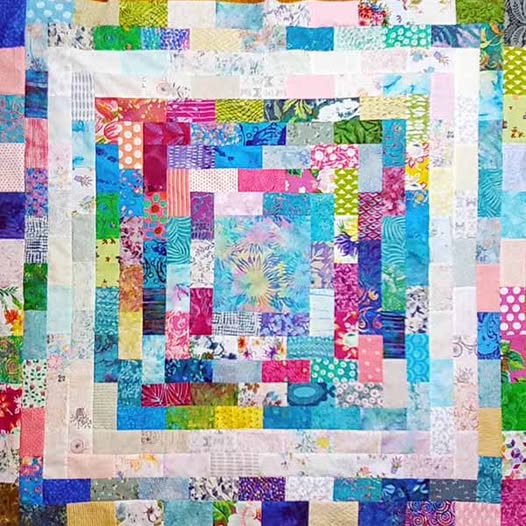
Once you have mastered the basic Card Trick Quilt Block – Pattern, the possibilities for customization are endless. One popular variation is the Scrappy Card Trick, where instead of using just four colors, you use a wide variety of scraps from your “stash.” This creates a vibrant, eclectic look while still maintaining the structure of the card trick illusion. Scrappy quilts are a fantastic way to use up fat quarters and leftover strips from previous quilting projects.
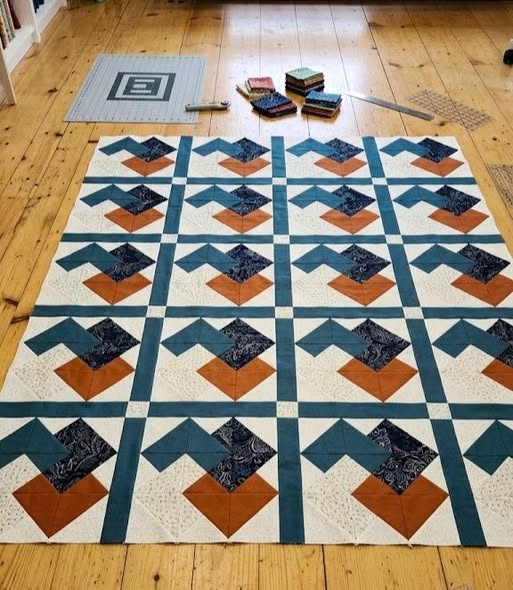
Another way to change the look of the Card Trick Quilt Block – Pattern is by playing with the background. While white or cream is traditional, using a dark background like navy blue or charcoal gray can make the cards look like they are glowing. This modern quilting approach breathes new life into the vintage pattern, making it suitable for contemporary home decor. The contrast between the “cards” and the background is what defines the success of the visual trick.
You can also experiment with the size of the “cards” by adding borders or sashing between the blocks. If you place sashing strips between each Card Trick Quilt Block – Pattern, the blocks will look like individual framed pieces of art. Without sashing, the cards from one block will appear to interact with the cards of the neighboring block, creating a secondary pattern that is quite complex and beautiful to look at across a large bed quilt.
For those who enjoy fussy cutting, you can use fabrics with specific motifs (like flowers or small animals) in the center of the cards. This adds an extra layer of detail to the Card Trick Quilt Block – Pattern. Just remember that because the units are triangles, you’ll need to be careful with the orientation of the prints so that the “fussy cut” image doesn’t end up upside down or sideways in the finished quilt block.
Advanced quilters might want to try a Double Card Trick, which involves adding more triangles to each unit to simulate eight overlapping cards instead of four. This significantly increases the number of pieces in the quilt pattern, but the result is a breathtaking display of textile art. It requires extreme precision and a deep understanding of the Card Trick Quilt Block – Pattern basics, but it is a rewarding challenge for any enthusiast.
Finally, consider the quilting design you will use once the top is finished. For a Card Trick Quilt Block – Pattern, “stitching in the ditch” (sewing directly in the seams) helps emphasize the edges of the cards. Alternatively, a swirling free-motion quilting design can provide a beautiful contrast to the sharp, straight lines of the geometric blocks. Your choice of quilt batting and backing fabric will also contribute to the final drape and feel of your handmade masterpiece.
Is the Card Trick Quilt Block suitable for beginners?
While it is considered an intermediate block due to the triangle construction, a patient beginner with good cutting skills can certainly succeed. It is recommended to practice making half-square triangles before attempting the full block.
How much fabric do I need for a single 12-inch block?
Generally, you will need small amounts of four different fabrics (about a fat eighth each) and roughly 1/4 yard of background fabric. It is a great scrap-friendly pattern.
Why do my points get cut off when I sew the units together?
This usually happens because the seam allowance is too wide or the triangles weren’t “squared up” properly. Ensure you have a 1/4 inch seam and that your triangle points stay exactly 1/4 inch away from the edge of the unit before joining.
Can I make this block using the foundation paper piecing (FPP) method?
Yes! Foundation paper piecing is an excellent way to get perfect points on a Card Trick Quilt Block – Pattern, especially if you are making very small blocks where accuracy is difficult to maintain with traditional cutting.
What is the best way to choose colors for this block?
Look for four colors that have a similar visual weight but different hues. Using a color wheel can help you find complementary or analogous colors that will make the card illusion look balanced and professional.
In summary, the Card Trick Quilt Block – Pattern is a magnificent example of how simple shapes like triangles and squares can be arranged to create a sophisticated optical illusion. Throughout this article, we have explored the essential geometry of the block, the tools required for precision, and a detailed step-by-step assembly process.
We also discussed how to customize your project through fabric selection and layout variations, ensuring that your quilting journey is both creative and technically sound. Mastering this pattern not only improves your sewing accuracy but also adds a classic, “wow-factor” design to your repertoire.